
Rehab & recovery
Shockwave Therapy
You’ve tried the rest. The ice. The stretches. The progressive exercises. Maybe even injections. And still that stubborn tendon, fascia, or muscle refuses to fully settle. The pain lingers. Function stays limited. Progress plateaus.
- Free consultation after an auto accident
- $0 upfront for most accident patients: we bill your auto insurance
- 4 Utah clinics: Provo, Spanish Fork, American Fork and West Valley City
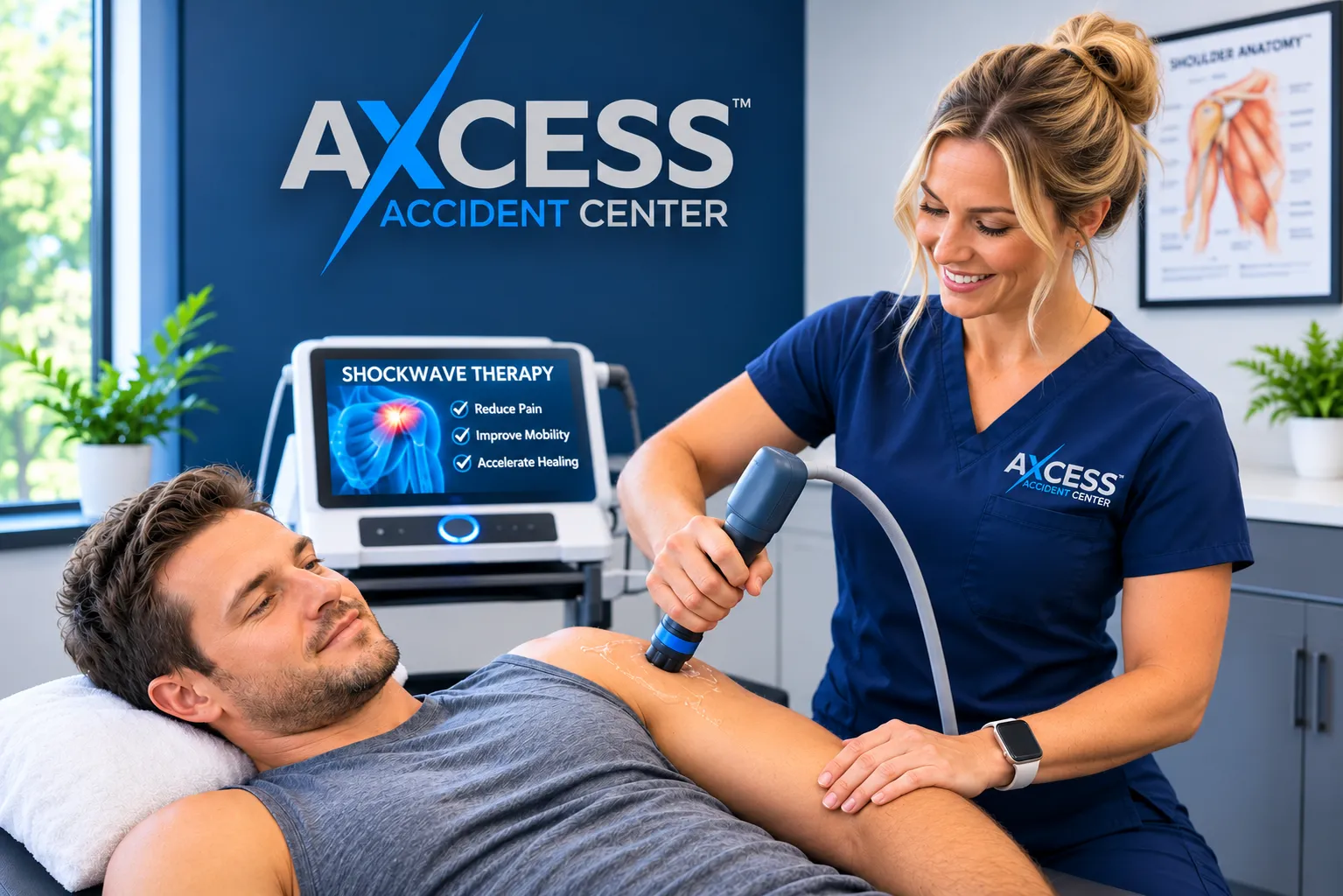
A Non-Invasive Reset That Wakes Up Stubborn Soft-Tissue Injuries
That’s often the moment clinicians turn to Shockwave Therapy—a modern, non-invasive treatment that uses acoustic pressure waves to restart the body’s own healing process in chronic or hard-to-heal musculoskeletal problems.
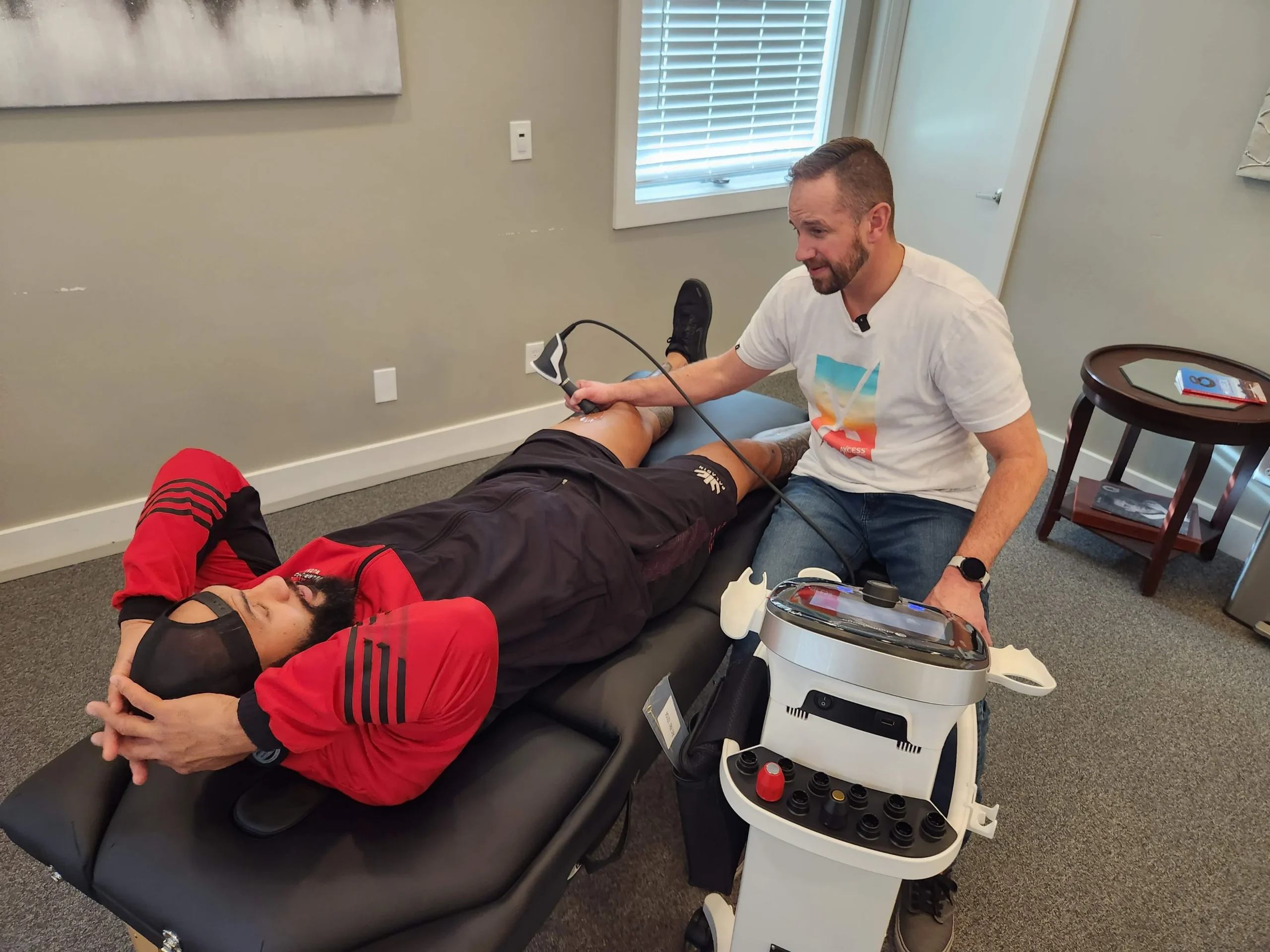
Shockwave Therapy Working
What Shockwave Therapy Actually Does
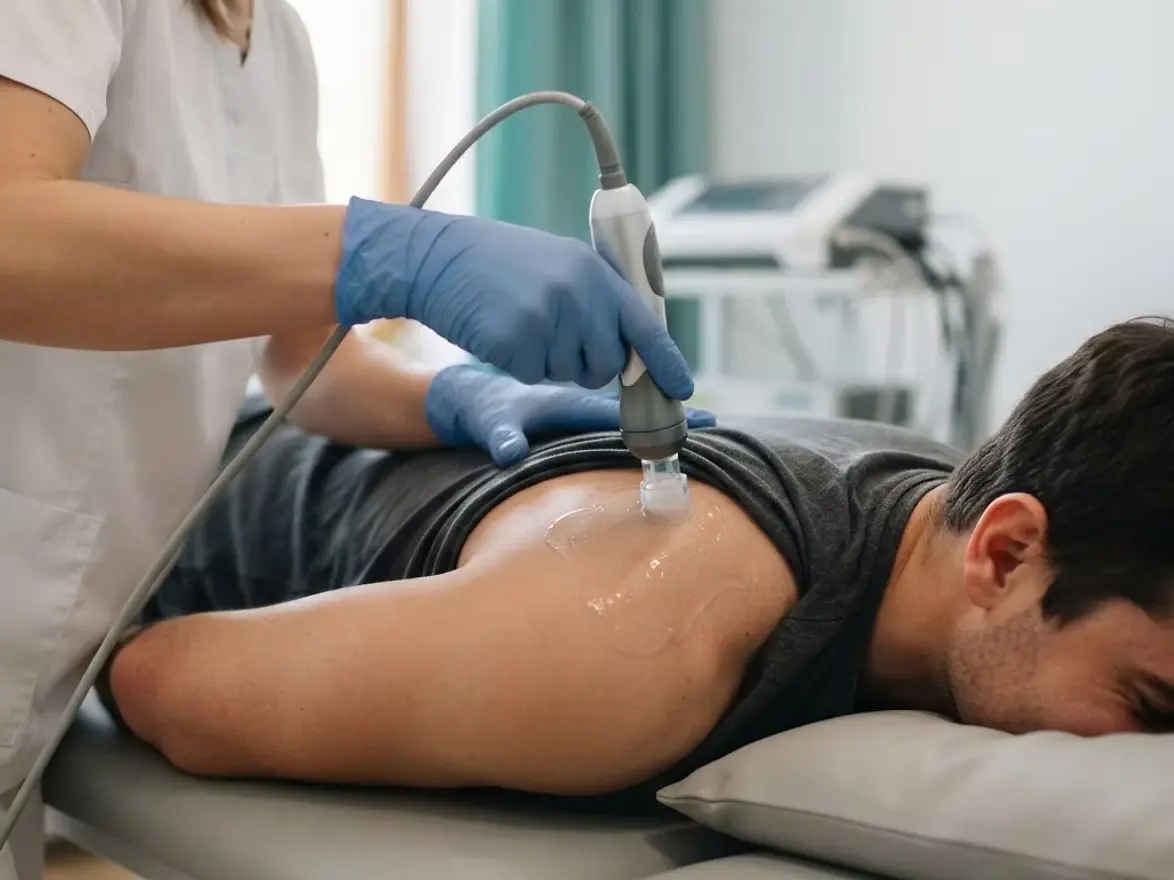
Extracorporeal Shockwave Therapy (ESWT), sometimes called EPAT, delivers focused or radial acoustic waves through the skin into the targeted tissue. These are mechanical pressure pulses—not electricity. There are no needles, no incisions, and usually little to no downtime.
When the waves reach injured tissue they create a controlled mechanical stress known as mechano-transduction. This triggers a cascade of biological responses:
- Increased blood flow and formation of new blood vessels (neovascularization)
- Release of growth factors that support tissue repair
- Stimulation of collagen production and organized remodeling
- Disruption of pain-signaling pathways and reduction of substance P
- Breakdown of calcium deposits in certain tendinopathies
- Enhanced cellular activity that can accelerate healing in tendons, ligaments, fascia, and even some bone conditions
Most sessions last about 10–15 minutes. A typical course involves several treatments spaced over a few weeks. Many people notice early pain relief (from the temporary overwhelming of pain fibers), while the deeper tissue remodeling continues for 8–12 weeks.
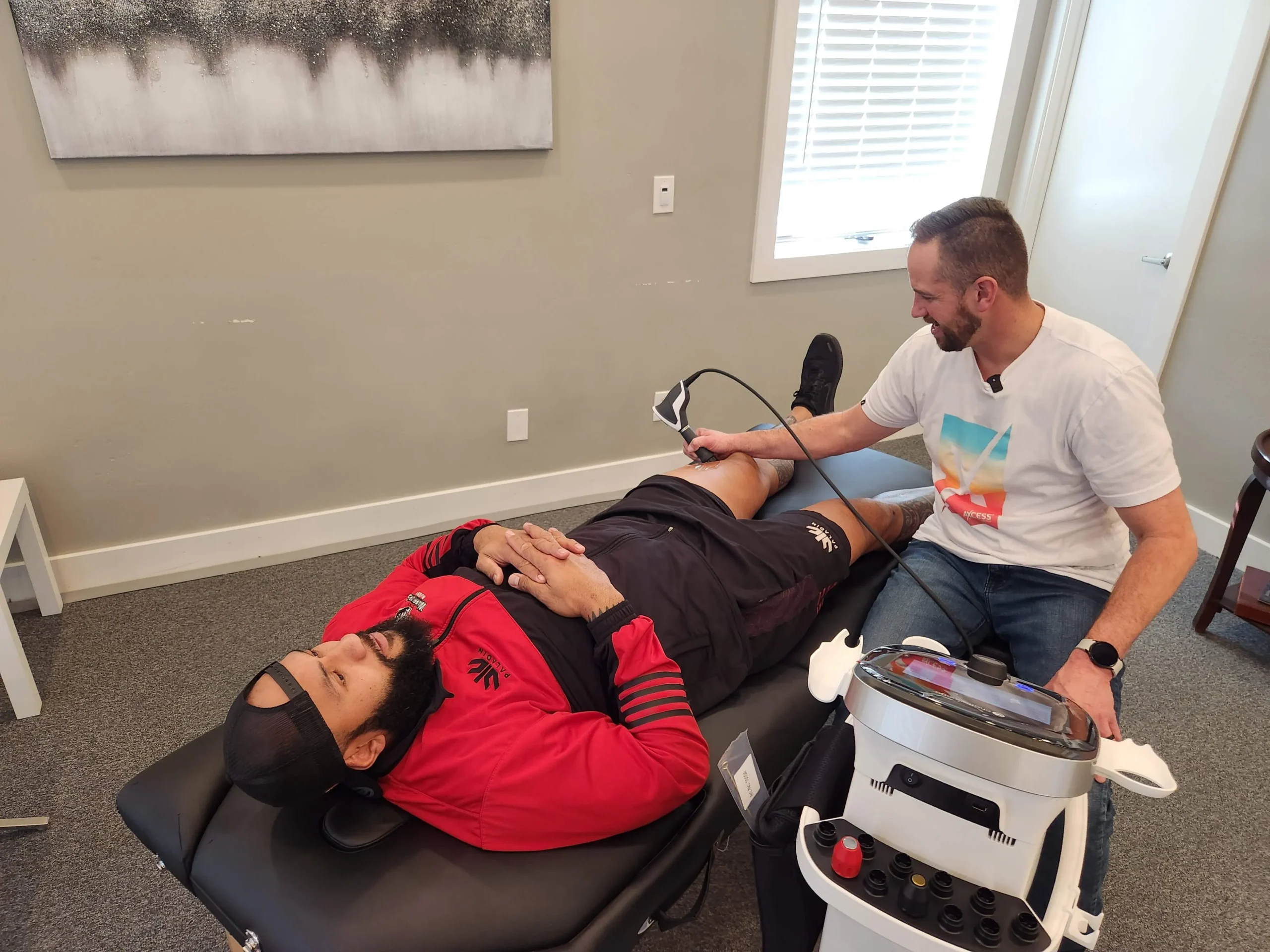
Conditions To Use Shockwave Therapy
Conditions Shockwave Therapy Treats
Strong clinical evidence supports its use for several chronic overuse and soft-tissue problems, especially when conservative care has stalled:
- Plantar fasciitis (one of the most studied and successful indications)
- Achilles tendinopathy
- Calcific tendinopathy of the shoulder
- Lateral elbow (tennis elbow)
- Patellar tendinopathy
- Greater trochanteric pain syndrome
- Certain muscle injuries and delayed bone healing in selected cases
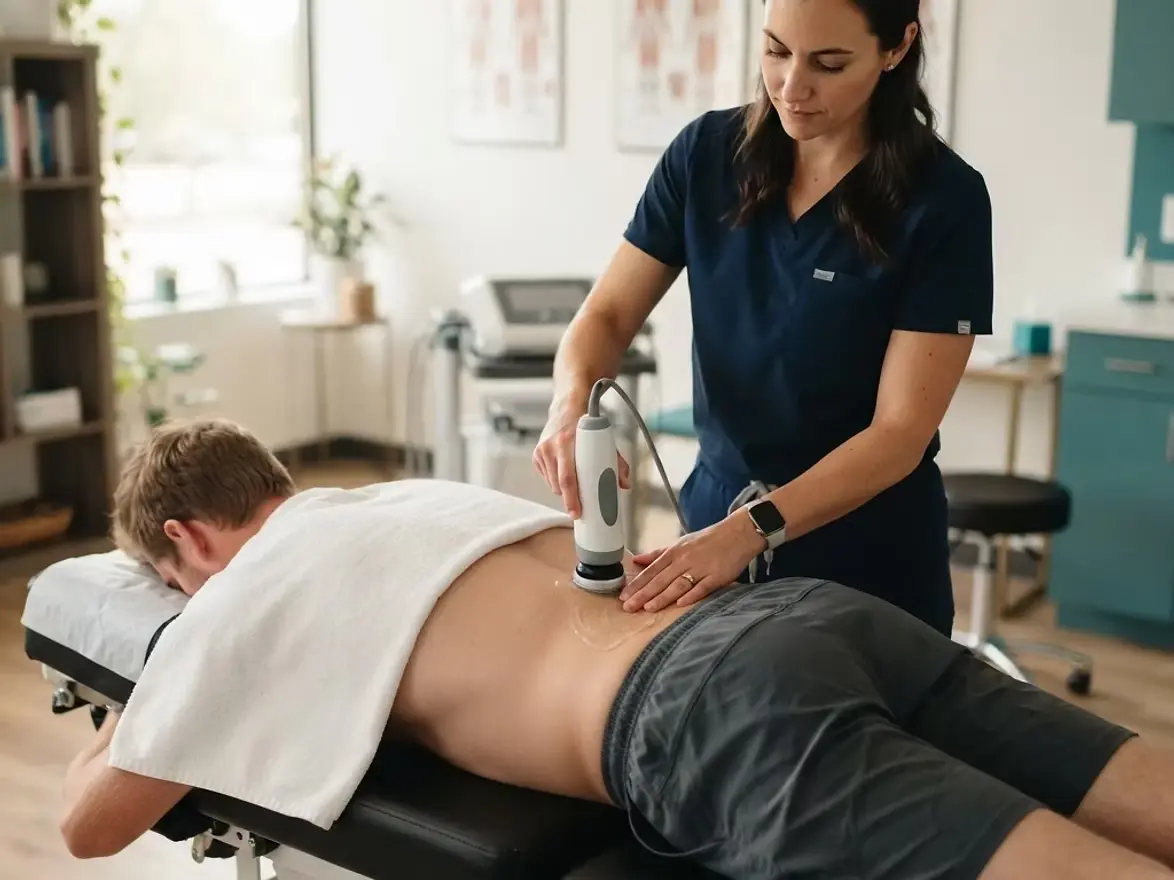
Recovery Plans For Shockwave Therapy
Conditions Where It Often Makes a Difference
It is particularly useful for tissues that heal slowly because of limited blood supply—tendons and fascia being classic examples. By improving circulation and stimulating cellular repair, shockwave therapy can help move a stalled healing process forward without surgery.
Why It Fits So Well Into Modern Recovery Plans
Unlike treatments that simply mask symptoms, shockwave therapy aims to influence the biology of the tissue itself. It is non-invasive, requires minimal activity restrictions afterward, and can be combined with rehabilitation exercises for better long-term results. Many patients appreciate that they can continue daily movement and progressive loading while the therapy works.
When paired with objective documentation (such as muscle activity scans) and structured rehabilitation, it becomes part of a clear, measurable pathway: identify the problem, stimulate healing, rebuild capacity, and track progress. For those navigating personal injury or workers’ compensation claims, the ability to show continued functional gains after a focused intervention can further support the medical necessity of ongoing care.
Shockwave Therapy For A Wake-Up Call
A Familiar Turning Point
Imagine someone months into recovery from an overuse injury or post-accident soft-tissue problem. Morning stiffness, activity-related pain, and a sense that the tissue just isn’t responding the way it should. After evaluation confirms a chronic tendinopathy or fasciitis that has not fully resolved, a course of shockwave therapy is introduced.
The sessions themselves feel like rhythmic pulses—uncomfortable for some, but usually well tolerated. Over the following weeks the pain begins to ease more consistently. Strengthening exercises become more productive. Function improves. Follow-up measures show reduced guarding and better capacity. What felt stuck starts moving again.
Not every case responds the same way, and results depend on proper patient selection, accurate targeting, and combination with appropriate loading and rehab. But for many, it offers a meaningful bridge between conservative care and more invasive options.
The Bottom Line
Shockwave therapy is not a magic wand. It is a scientifically grounded tool that uses precise mechanical energy to encourage the body to heal itself more effectively. For chronic soft-tissue injuries that have plateaued, it can reduce pain, support tissue remodeling, and help restore function—often with minimal disruption to daily life.
If you’ve been dealing with persistent tendon, fascia, or related musculoskeletal pain that hasn’t fully responded to standard care, ask your provider whether shockwave therapy is appropriate for your specific condition. When the right intervention meets the right timing, recovery can shift from hopeful waiting to active, measurable progress.
Sometimes the tissue doesn’t need more rest.
It needs a carefully delivered wake-up call.
Shockwave Therapy FAQ
What is shockwave therapy, and how does it work?
Shockwave therapy is a non-invasive treatment using acoustic pressure waves to stimulate targeted tissues. It may influence pain signaling and tissue responses. Axcess uses it for selected chronic musculoskeletal conditions, particularly tendon and soft tissue problems.
What conditions can shockwave therapy help treat?
It may help certain patients with plantar fasciitis, Achilles tendinopathy, calcific shoulder tendinopathy, and other chronic tendon conditions. Evidence varies for tennis elbow, patellar tendon, and hip-related tendon pain.
Does shockwave therapy hurt?
Patients may feel rapid tapping or pulses. Sensitive areas can be uncomfortable, but intensity can often be adjusted. Temporary tenderness or soreness may follow.
How many shockwave therapy sessions will I need?
Many protocols involve about three to five sessions spaced one to two weeks apart, although appropriate schedules vary by condition and patient response.
Can shockwave therapy help with injuries caused by a car accident?
It may be considered for persistent tendon or soft tissue problems following a crash, depending on diagnosis and healing stage. Evidence for treating acute whiplash specifically is limited.
How soon will I notice results from shockwave therapy?
Some patients notice changes early, while others improve over several weeks. Results depend on the condition and individual factors; relief is not guaranteed.
Can shockwave therapy be combined with chiropractic care and rehabilitation exercises?
Yes. It may be used with chiropractic care and strengthening or mobility exercises when clinically appropriate. Rehabilitation remains important for restoring physical capacity.
Where can I receive shockwave therapy at Axcess Accident Center in Utah?
Shockwave therapy is available at Axcess Accident Center’s American Fork and West Valley City locations. Contact either clinic for an evaluation and current availability.
Ready to Get Started?
Call our main line or schedule online at any of our four Utah clinics.